
Experience Outcome-First
Enterprise Transformation.
Enterprise transformation is an execution problem. The organizations that come out ahead have a partner who knows the difference between deploying a solution and delivering an outcome.
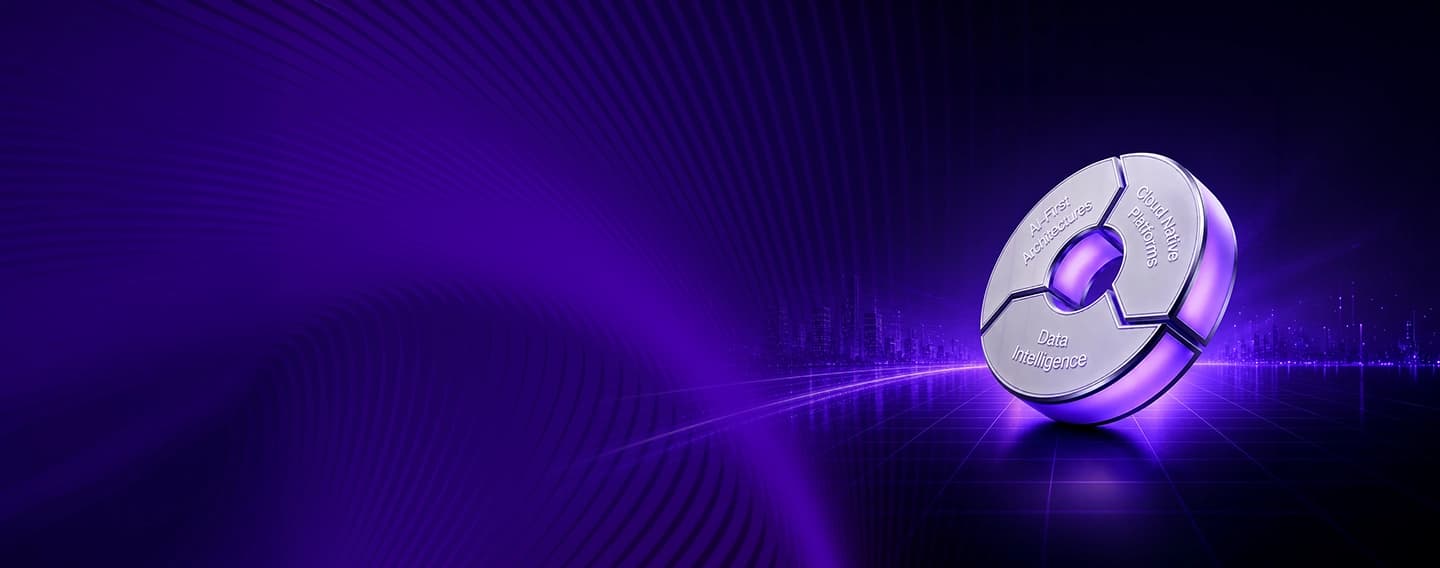
At OpenTeQ, every engagement is built to produce measurable business performance from day one -AI-first architectures, cloud-native platforms, and data intelligence at the core, governed by our OQ Framework that qualifies every workstream and measures every deliverable against real business outcomes.
What a transformation
program is actually made of.
Each one stands alone as an engagement. Most programs combine three or four, and we'll tell you which before you commit to any.
AI Services
Put models to work on operations, not demos.
Copilots, agents, and automation embedded in the processes that actually cost you money — with the data foundation, guardrails, and evaluation needed to run them in production rather than in a pilot.
- Generative AI and agent development
- AI readiness and use case assessment
- Machine learning models and MLOps
- Intelligent and robotic process automation
- Model governance, evaluation, and guardrails
- AI-assisted engineering across delivery teams
Data & BI
Numbers people actually trust.
The foundation every AI ambition eventually stalls on. Pipelines, governed definitions, and reporting your functions open without asking IT first.
- Data platform and pipeline engineering
- Warehouse and lakehouse architecture
- BI dashboards and self-service analytics
Application Modernization
Untangle the system nobody wants to touch.
A decade-old application holding critical logic, understood by two people, blocking the cloud migration and everything queued behind it.
- Legacy assessment and dependency mapping
- Business rule extraction and documentation
- Incremental strangler-pattern migration
- Technical debt register with cost of delay
- Characterization test coverage
- Data migration and reconciliation
Application Development
Build what no vendor sells you.
The pricing engine, the broker portal, the operations console — processes too specific to buy off the shelf, built as systems someone else can maintain.
- Architecture and API design
- Full-stack and back-end delivery
- Integration and middleware engineering
Software Product Engineering
Ship product, not projects.
Dedicated teams for software companies and product groups — from first release through the architecture rework that scale eventually demands.
- MVP through scale delivery
- Multi-tenant SaaS architecture
- Product roadmap and release engineering
Cloud
Migration is the easy half.
Lifting workloads is solved. The landing zone, identity model, and cost structure that keep it viable in year two are where the work is.
- Landing zone, network, and guardrails
- Migration waves with defined rollback
- Infrastructure as code and FinOps
DevOps
Make releases boring.
When a release needs a bridge call, teams batch changes. Large batches fail and take a weekend to unpick.
- CI/CD pipelines with enforced gates
- Reproducible environments
- Observability and DORA baselining
Quality Engineering
Confidence, not coverage numbers.
A suite that takes four hours and fails randomly gets ignored, whatever its coverage says.
- Risk-based test strategy and design
- Automation frameworks you can extend
- Performance, load, and security testing
Cybersecurity
Designed in, never bolted on.
Every integration widens the attack surface and every AI system touches data that needs governance.
- Security assessment and posture review
- Identity and access governance
- Continuous monitoring and response
Enterprise Applications
The platforms that run the business.
Certified practices on the core systems your operations depend on — implementation, rollout, integration, and support.
- SAP, NetSuite, and Guidewire
- Salesforce, Microsoft, and Duck Creek
- Implementation, rollout, and support
Not sure which capability your problem belongs to?
Describe the blocker in a sentence — the legacy system, the release process, the cloud bill, the report nobody trusts. We'll tell you where it sits and what we'd do in the first month.
How operations actually get transformed in your sector.
Claims automation for a carrier and order automation for a manufacturer share a toolkit — not a regulatory model, a change plan, or a risk register. Select a sector to see what we modernize and where programs usually start.
Insurance
Core systems configured for a product line you no longer sell, surrounded by spreadsheets and manual handoffs. The value usually sits in the operations around the platform rather than in replacing it.
Claims and policy operations
Intake automation, document extraction, and workflow around Guidewire and Duck Creek.
Underwriting support
Risk data aggregation and decision models surfaced inside existing underwriter tools.
Legacy policy administration
Incremental modernization of systems too critical to replace in one move.
Regulatory reporting
Governed data definitions so filings stop being reconciled by hand.
Automating first notice of loss intake and document classification, measured against straight-through processing rate.
Named people, in your
timezone, with a way out.
The delivery model matters more than the capability list. These are the terms we work under on every program — and they are worth asking any vendor to match.
A named delivery lead who doesn't change
One person accountable for the outcome, working your hours, replaced only with your written sign-off.
Working software inside the first quarter
Progress is shown in a running environment rather than a status deck. If a milestone slips, you hear it that cycle.
One team, not two
Offshore engineers join your standups and reviews directly instead of reporting through a parallel management chain.
Handover as a contracted deliverable
Runbooks, architecture decision records, and knowledge transfer ship with the work — so staying with us stays a choice.
- Practitioners
- 500+
- Delivery locations
- US, India, Canada
- Platform practices
- SAP · NetSuite · Guidewire · Salesforce · Microsoft · Duck Creek
- Engagement shapes
- Project · Managed service · GCC · Embedded talent